
The candy is counted. The porch light is off. And somewhere in your house, a costume is slumped over a chair, smelling a little like fog juice and fun-size candy bars. Before you shove those outfits into the back of a closet, give them ten minutes of love. Knowing how to clean and store Halloween costumes the right way makes a big difference. Do it, and your look is ready to party next October instead of crushed, musty, or stuck to itself.
We ship millions of orders a year at HalloweenCostumes.com, and over half of them go out in October alone. That's a mountain of fleece, faux fur, latex, sequins, and blow-up dinosaurs heading into closets on November 1. Our team works with every one of those materials, so we know which ones forgive a lazy weekend and which ones don't. With this guide, so can you!
What Should You Do With Your Costume the Night After Halloween?
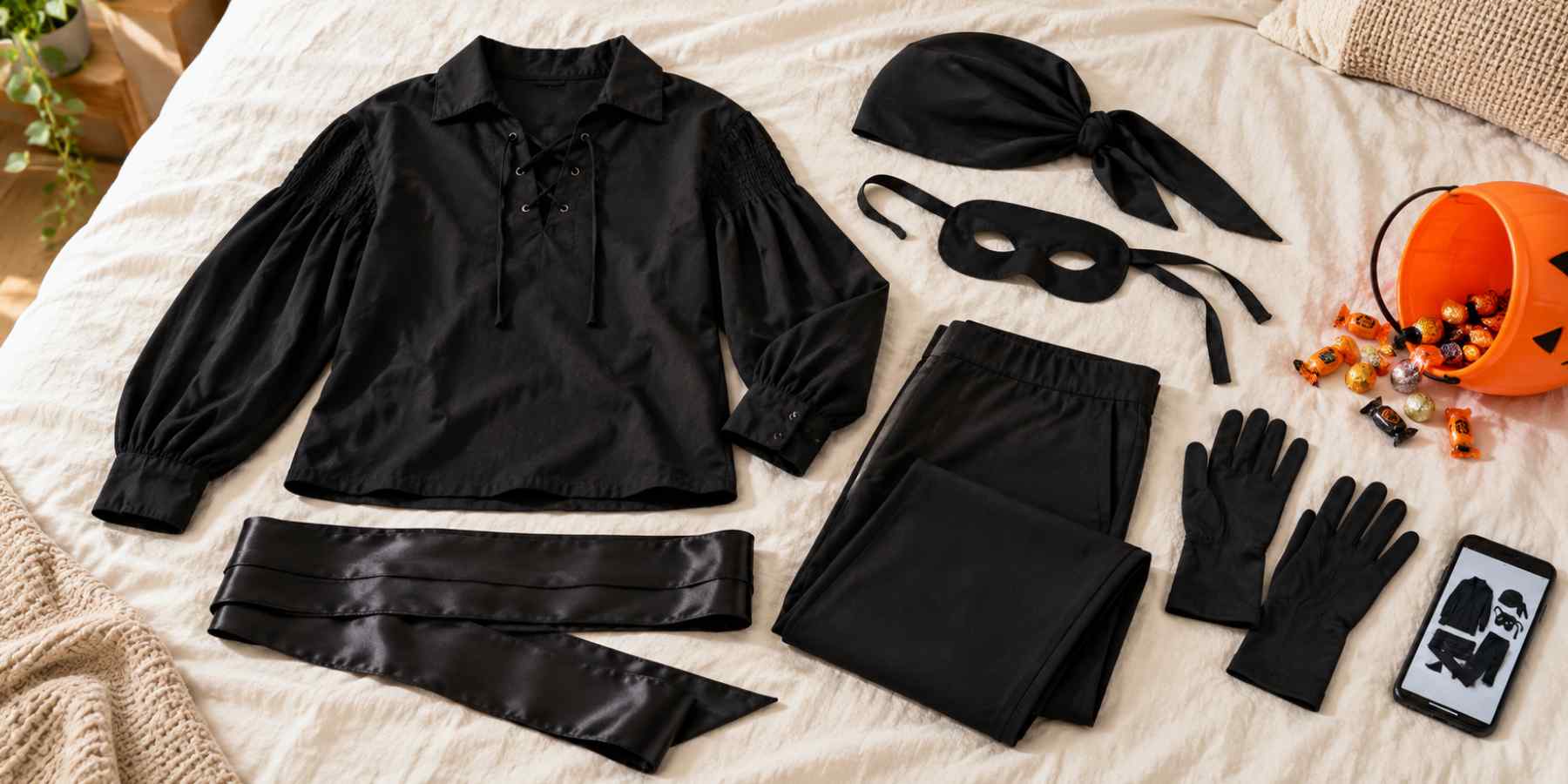
Empty it, unplug it, and let it breathe. Those three quick moves stop most costume damage before it even starts.
Check every pocket, pouch, and trick-or-treat pail for candy first. Sticky wrappers stain fabric, and crumbs invite bugs to move in. Next, pull the batteries out of anything that blows air, lights up, or makes noise. Then blot any fresh stains with a damp cloth. Don't rub, and keep stained pieces far away from the dryer, because heat can lock fake blood in for good. Last, hang the costume up or lay it flat overnight so the sweat can dry.
Got a big set with lots of pieces? Lay every part out on the bed and snap a quick photo before anything goes in the wash. That photo is your proof that the belt, the hat, and both gloves all made it home. It also turns into next year's packing list, which is handy when you're getting dressed in a hurry on October 31. Small parts love to vanish, and a picture keeps them honest.
Your night-after checklist:
- Empty pockets, pouches, and candy pails.
- Remove batteries from fans, lights, and sound chips.
- Blot fresh stains. No rubbing and no dryer.
- Air it out on a hanger or flat surface.
- Photograph every piece of multi-piece sets.
Once the costume has aired out, the tag sewn inside may tell you exactly what comes next.
How Do You Read a Halloween Costume Care Label?
Shop the look: Made By Us | Exclusive Costumes
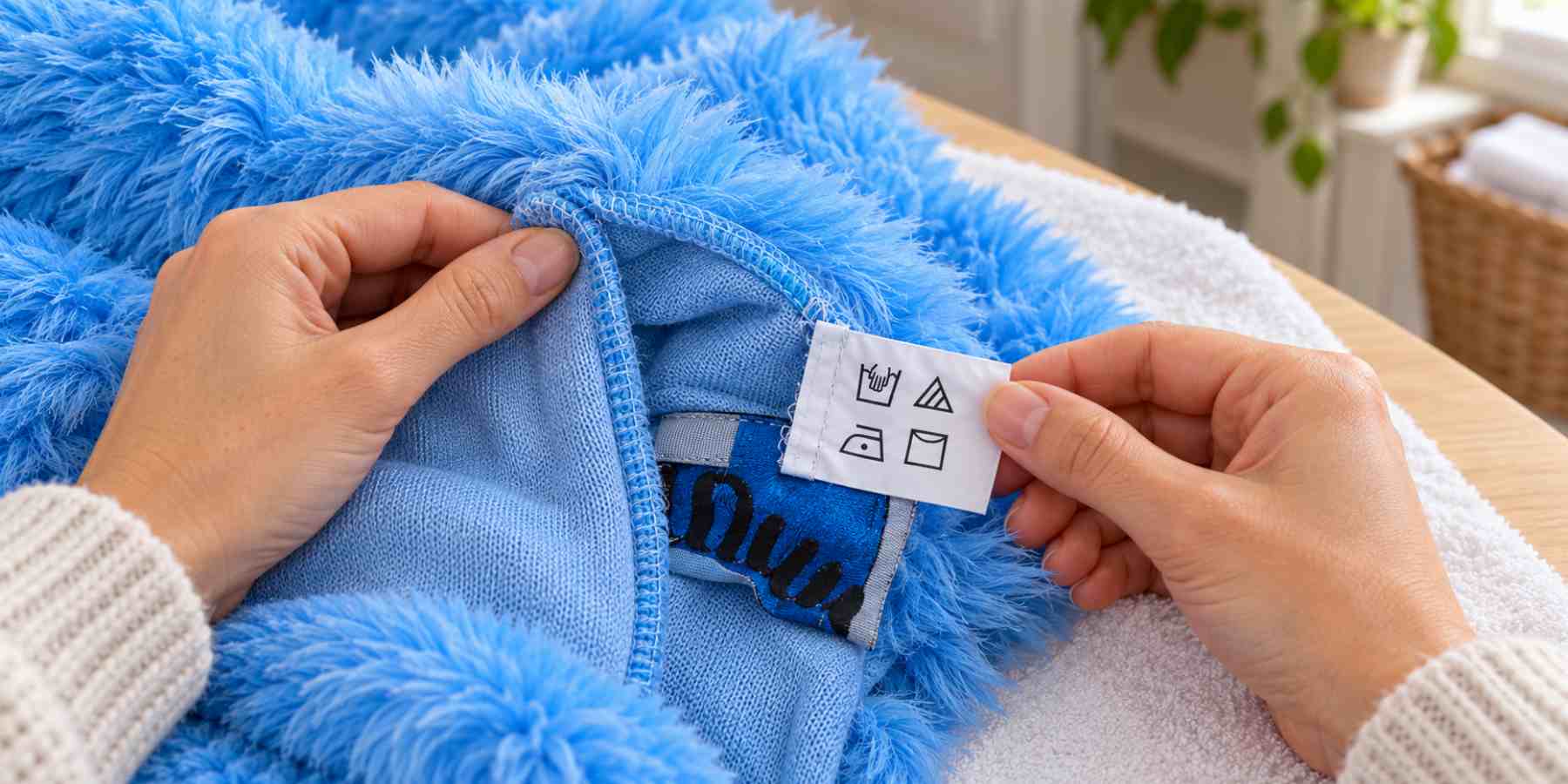
Look for the sewn-in tag along a side seam or inside the collar. It tells you the safe water temperature, whether the washer is okay, and if the dryer is off limits.
The little symbols do most of the talking. A tub of water means the costume is washable, and a hand in the tub means hand wash only. Dots inside the tub show the heat level, so one dot means cold. A square with a circle inside stands for the dryer. An X over any symbol means don't do it. No tag at all? Play it safe. Use cold water, wash by hand, air dry, and test any cleaner on a hidden inside seam first.
Our Made By Us costumes are designed by our own product development team, so their tags match the exact materials inside each piece. Costumes from other brands can have different rules, even when two looks seem alike. If your Woody costume and your Buzz Lightyear costume came from different makers, check both tags before you wash them together. One minute of reading now can save a whole costume later, and it beats guessing every single time.
How Do You Wash Halloween Costume Jumpsuits and Onesies?
Shop the look: Men's Onesies | Women's Onesies | Kid's Costume Onesies
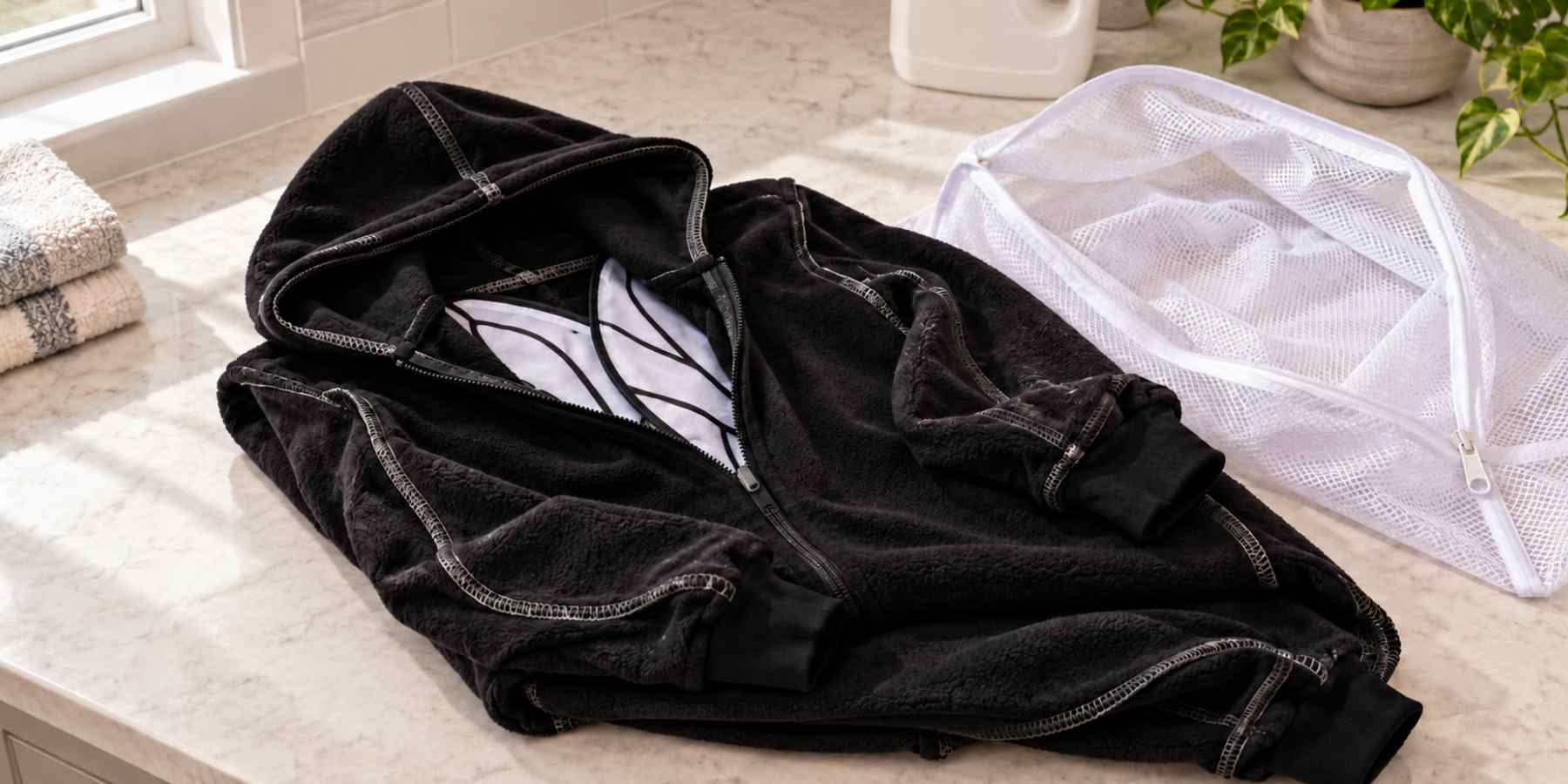
Most costume jumpsuits and onesies can go in the washer on a cold, gentle cycle. Zip them up, turn them inside out, and skip the fabric softener.
Fleece and Minky plush are tough, but friction is their enemy. When fleece rubs against other clothes, it grows tiny fuzz balls called pills. So wash fleece suits like the Fleece Fly Costume Onesie alone or with other fleece. Tuck them into a mesh laundry bag if you have one. Use a mild detergent. Fabric softener and dryer sheets coat fleece fibers, so leave them out. Air dry if you can, or tumble on low and pull it out while it's still a little damp.
Printed suits need one more step. Character onesies with printed faces and our sublimated WWE union suits should stay inside out the whole time. That way the print never rubs against the drum. Jumpsuit uniforms like the Ghostbusters Costume can go in the same cold, gentle wash. Before storage, stuff any hood that has ears, horns, or eyes with tissue paper. That keeps the Elmo Costume Onesie looking at you, not at the floor.
Zippers or Hook and Loop: What Do You Close Before Washing?
Close both. Zip every zipper all the way up and press every hook and loop tab together firmly before the costume goes in the wash.
An open zipper has sharp little teeth. They snag nearby fabric, and they can even scratch the glass door on a front-loading washer. Open hook and loop tabs are worse for fuzzy costumes. The hooks grab fibers, start pills, and fill up with lint until the tab stops sticking. That's how a cape ends up held on with a safety pin. If old tabs are already clogged, press a strip of tape onto the hooks or pull the lint out with a fine comb.
Zippers | Hook and loop | |
Before washing | Zip all the way up | Press tabs firmly closed |
Why it matters | Open teeth snag fabric and scratch washer doors | Open hooks grab fibers, cause pills, and fill with lint |
Avoid | Yanking a stuck pull | Fabric softener, bleach, and high dryer heat |
Quick fix | Rub a stiff zipper with a pencil tip or bar soap | Clean out lint with tape, a comb, or tweezers |
In storage | Leave zipped so the costume keeps its shape | Leave closed so the hooks stay clean |
How Do You Clean and Store an Inflatable Costume?
Shop the look: Inflatable Costumes
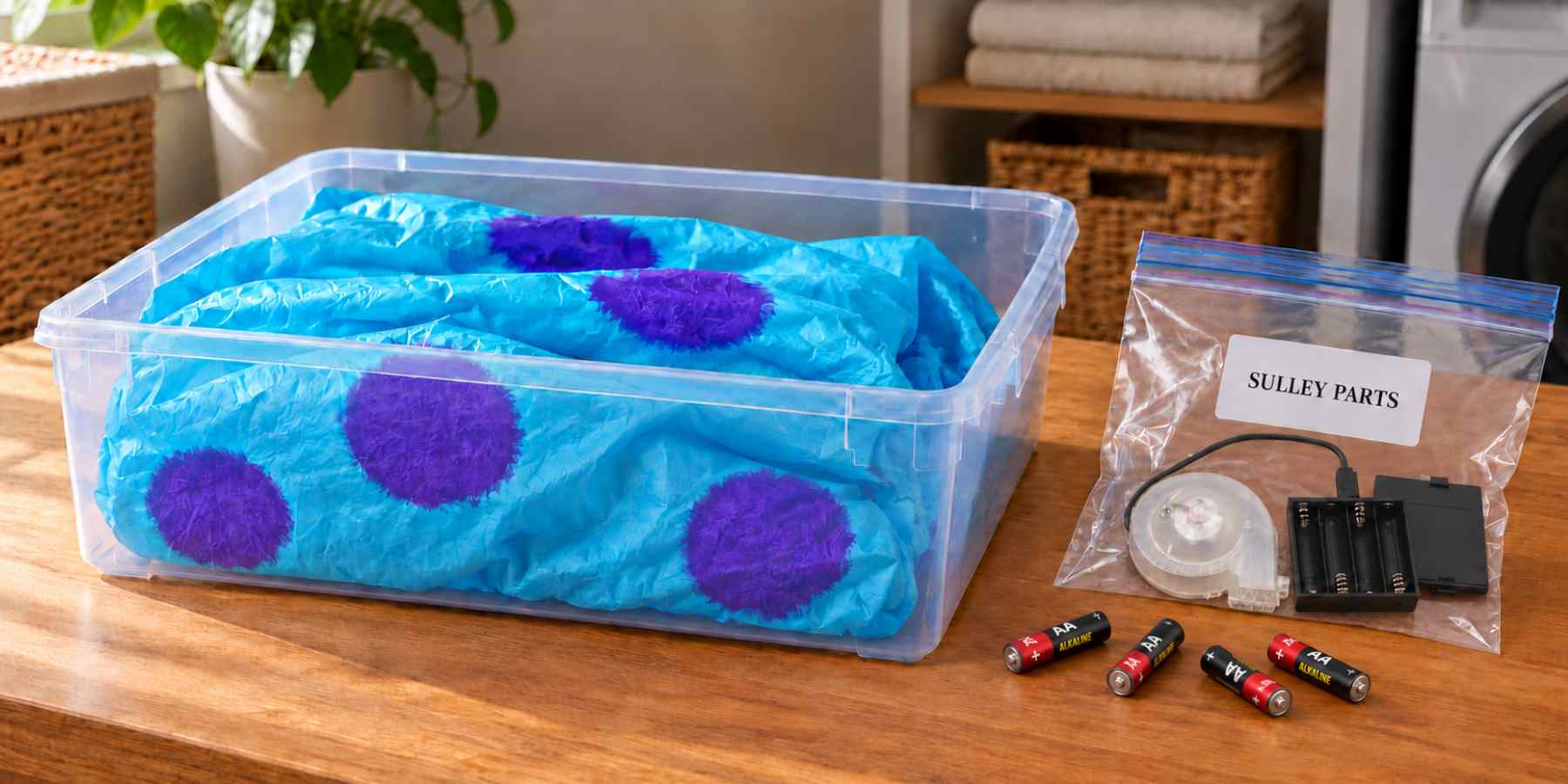
Take out the fan and battery box first. Then spot clean the shell with a damp cloth and mild soap, and dry every fold completely before you roll it up.
Inflatables like the Sulley Inflatable Costume run on a small fan that pulls in outside air to puff you up. That fan is the heart of the costume, and water is its worst enemy. Instructions from inflatable costume makers say to remove the fan and battery box before any cleaning and to never get the fan wet. Twist off the fan cover, lift the fan out, and slide the battery box from its pocket. Set both on a dry towel.
Now clean the shell. Most inflatable tags call for spot cleaning or a gentle hand wash, so check yours first. Wipe dirty areas with a soft cloth and a drop of mild dish soap. Then wipe again with plain water so no soapy film is left. Drying is the big one. Water hiding in a fold turns into mildew, and mildew leaves a stain and a smell that never fully goes away. Hang the costume open overnight with the zipper undone.
Note that some of our Made By Us Inflatable Costumes actually have a faux fur shell to give them a truly realistic look, so those have some extra care concerns, too! Check out the next sections on cleaning fleece, fur, and mascot heads!
Batteries need their own exit plan. Alkaline batteries can leak even when they just sit there, and that leak eats away at the metal contacts. Texas Instruments suggests pulling batteries from any device you won't use for three months or more, and an inflatable costume usually waits about eleven. Store the fan, battery box, and any clips in a labeled zip bag inside the same bin, so the parts never get split up. Next September, load fresh batteries and test the fan.
How to store an inflatable costume:
- Check that every fold is bone dry, inside and out.
- Fold it loosely. Don't crease it tight around the fan hole.
- Bag the fan, battery box, and clips together and label the bag.
- Put everything in one lidded bin.
- Store the bin off the floor, away from damp basements and hot attics.
Quick fix: small rips in the shell can be stitched by hand or covered with clear packing tape. Check the fan cord and housing for cracks before every season.
How Do You Keep Faux Fur and Plush Costumes Soft and Fluffy?
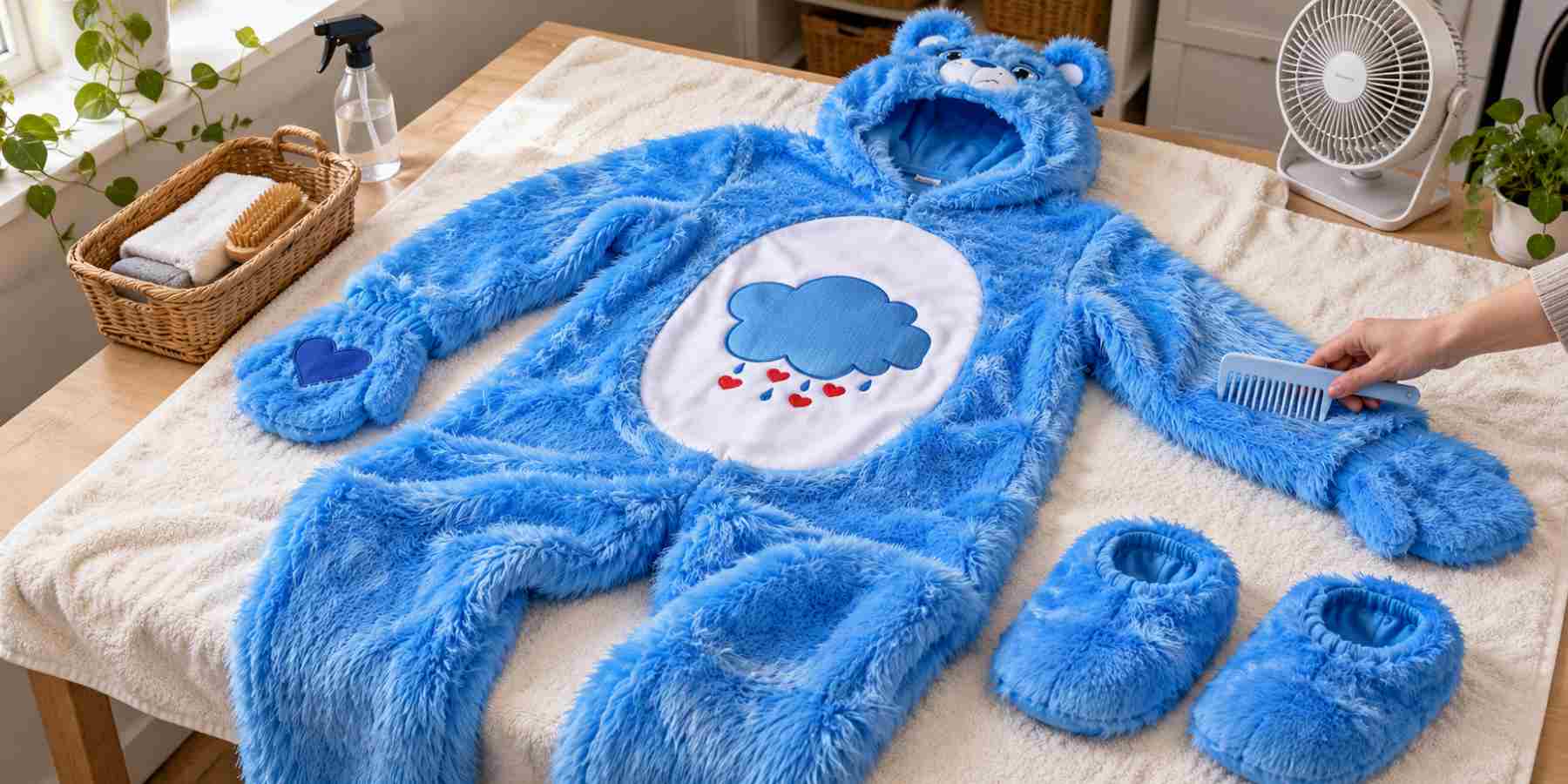
Shop the look: Deluxe Lion Costume | Care Bears Retro Grumpy Bear | Animal Costumes
Wash faux fur in cold water, by hand or on a delicate cycle, and never wring it. Then brush the fur while it dries, and skip the dryer and iron completely.
Faux fur is made of soft synthetic fibers, and heat is their kryptonite. Hot water and dryer heat can frizz, flatten, or even melt the pile for good. Spot clean small marks first by dabbing with a damp cloth and mild soap. For a full wash, fill a tub with cold water and a splash of gentle detergent. Or use a cold delicate cycle with the costume inside out and alone. Once it's rinsed, roll it in a big towel and press. No twisting.
Here's the step most people miss. Fur dries in whatever shape you leave it in, so brushing while it's still damp is what keeps it fluffy. Costume fur makers swear by this rule. Use a wide-tooth comb or a metal pet brush and work in the same direction the fur grows. A big suit like the Jack Links Sasquatch Costume can take a day or two to dry. Aim a fan at it and flip it every few hours.
Once it's dry, give plush room to breathe. Hang it in a cotton garment bag or lay it loosely in a big bin, and never squash it under heavier costumes. Crushed fur is hard to bring back to life. Wrinkles come out best with a steamer held a few inches away. Passing down a baby costume like the Infant Fuzzy Buzzy Bee Costume? Check every seam and snap first, so nothing is loose for the next little bee.
How Do You Clean a Mascot Costume Head Without Ruining It?
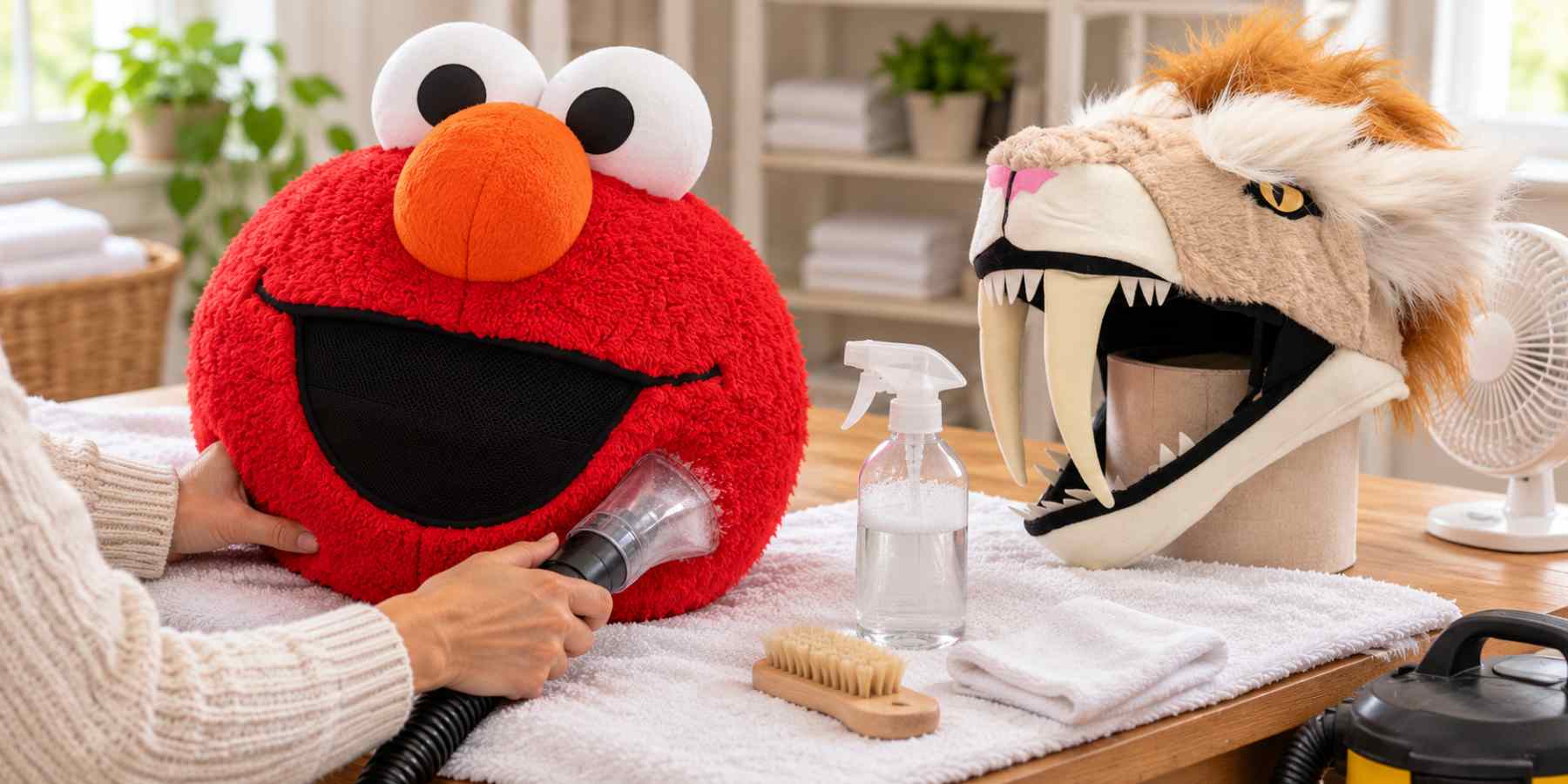
Shop the look: Mascot Costumes | Sesame Street Costumes | Jawesome Sabertooth Costume Hat
Never soak a mascot head, and never send it to the dry cleaner. Mist it with mild soapy water, brush gently, pull the moisture out with a wet/dry vacuum, and let it dry completely.
Mascot heads, like the big grin on our Sesame Street Elmo Costume are built on foam shapes covered in fur or felt. Foam soaks up water like a sponge and then hangs on to it for days. That's how mold sneaks in. Mascot makers also warn that dry cleaning chemicals and heat can break down foam and glue. So the head gets a spa day, not a bath. Work on one small area at a time and take it slow.
Mist a dirty spot with cold water mixed with a teaspoon of mild detergent. Brush it gently with a soft brush. Then use a wet/dry vacuum to suck the soapy water back out. Rinse the same way with plain water. Inside the head, wipe down every spot that touched skin. For odor, pro mascots and theater costume crews use a clever trick: a spray of plain vodka mixed with water. The alcohol fights smells, then dries fast and disappears.
The body is easier. Pull out any padding, turn the suit inside out, and wash it cold on gentle. Let the head dry with air moving through it, like in front of a fan, before it goes anywhere. Then store it upright on a shelf with nothing stacked on top. The same spot clean rule works for structured headpieces like the Jawesome Sabertooth Costume Hat. Next year, wear a thin sweat cap under the head to keep it fresher.
How Do You Care for a Halloween Costume With Lots of Pieces?
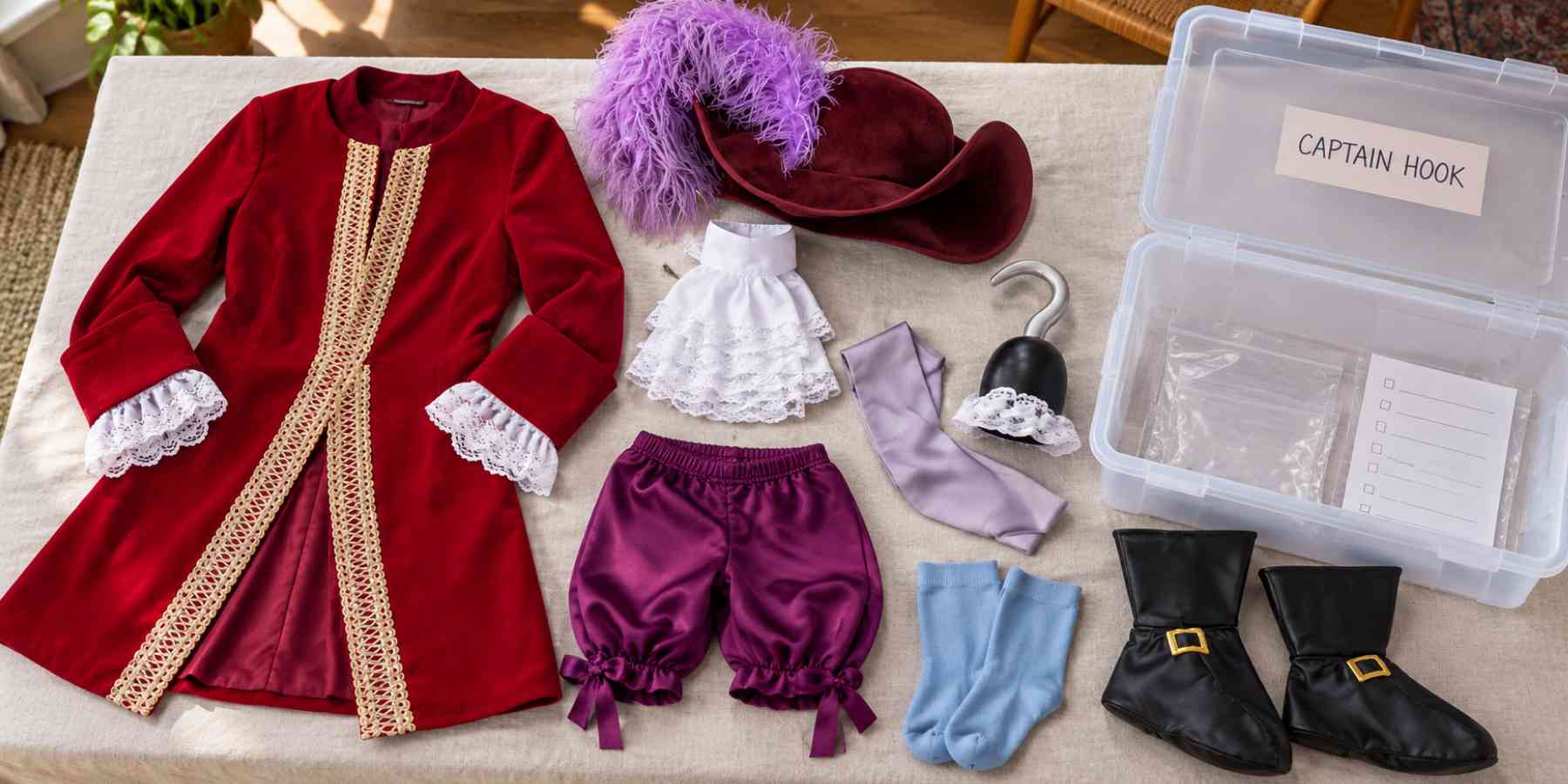
Shop the look: Princess Bride Westley Costume | Deluxe Disney Captain Hook Costume
Treat it like a kit. Photograph every piece, clean each one by its own material, and store them all together in one labeled bin.
Deluxe sets come with a lot of parts. Just look at the Deluxe Captain Hook or the Queen Amidala costume. Coats, belts, sashes, gloves, hats, and trim all tag along. The small parts are always the first to vanish. So before you clean anything, lay every piece out and snap a photo. That picture becomes your packing list next year. It's also how you'll spot a missing brooch today instead of on October 30.
Now sort by material, because one costume can need three kinds of care. Washable knit and polyester pieces go in a cold, gentle wash with every zipper, hook, and button closed. Faux leather and foam armor get a wipe with a damp cloth only. Metal-look trim and glued details stay dry. Pull off belts, brooches, and armor before anything hits the water. Then pack it as one kit: a bin or garment bag, small parts in labeled zip bags, and a packing list taped inside the lid.
Quick fix: tighten loose buttons and hooks now, while you still remember which piece is which. Hang coats and capes on padded hangers with tissue paper in the shoulders.
Special note: Velvet fabrics or those with heavy colors (red, especially) can bleed. So, keep tissue papers that came with your costume arrival and place them between to prevent color bleed!
How Do You Wash Sequin, Satin, and Tulle Halloween Costumes?
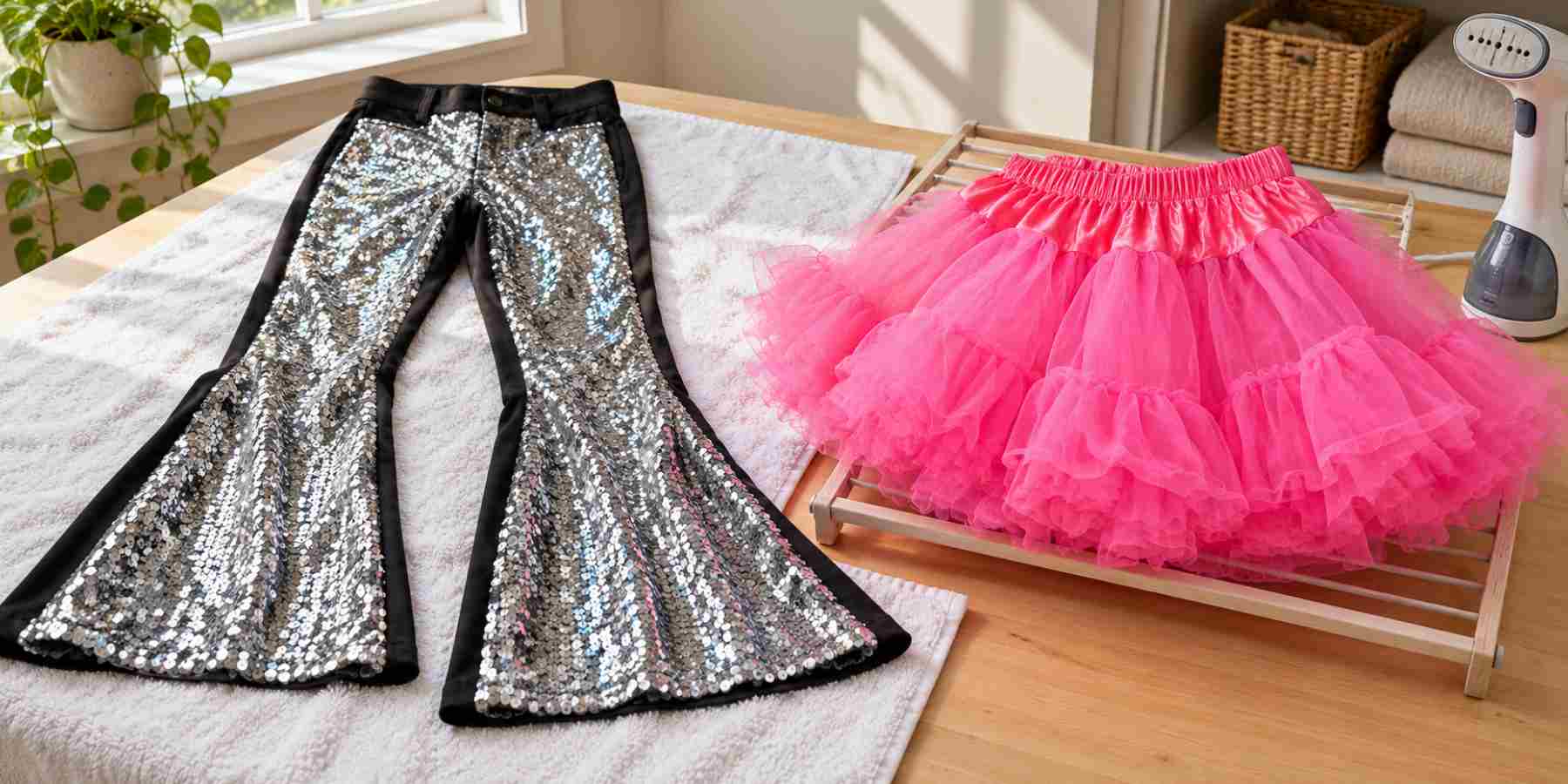
Shop the look: Petticoats | Women's Retro Strawberry Shortcake Costume | Disco Costumes
Check the tag first, because many sequin pieces are dry clean only. If hand washing is allowed, use cold water, turn the costume inside out, and lay it flat to dry.
Sparkle is fragile. Sequins are tiny shiny discs sewn on with thread, and heat can melt them or knock them loose. That's why sequin costumes should never go in the dryer. If the tag says hand wash, fill a sink with cold water and a little mild soap. Turn the costume inside out and swish it gently. Don't scrub. When you lift it out, use both hands. Wet sequins are heavy, and their weight can stretch the fabric underneath.
Lay it flat on a towel to dry, and smooth it back into shape. For storage, fold heavy sequin pieces inside out with tissue paper instead of hanging them, so the weight doesn't pull on the shoulders. Dress costumes like the Little Mermaid Costume can rest in a cotton garment bag. Tulle skirts and petticoats perk right back up with a steamer held a few inches away from the inside. See a loose sequin? Stitch it now, before the gap grows!
How Do You Clean and Store a Halloween Mask?
Shop the look: Masks | Mouth Mover Masks | Premium Masks
Wash a latex mask inside and out with lukewarm water and mild soap, and dry it completely. Then dust the inside with a little baby powder or cornstarch, stuff it with tissue, and store it somewhere cool and dark.
Latex is natural rubber, and three things wear it down fast: skin oil, heat, and light. Every time you wear a mask like the Disney Ursula Latex Mask, the inside picks up sweat and makeup. Left there, those slowly break down the rubber. So wash it soon after the party. Use lukewarm water and a gentle soap, inside and out. Blot the inside dry with paper towels, then let it air dry the rest of the way.
Next comes the powder. A light dusting of talc, cornstarch, or baby powder inside keeps the latex from sticking to itself. Just a light coat is plenty. Then give the mask a shape to hold. Stuff it with tissue paper or crumpled plastic bags, or set it on a foam wig head. Never fold it. Folds turn into creases, and creases turn into cracks. Handle it by the edges or from the inside, so your fingernails don't poke a hole.
Light is the sneaky villain here. Sunlight dries latex out and makes it brittle, and longtime mask collectors warn that even indirect light from windows or fluorescent bulbs adds up. Pick a cool, dark closet shelf, not a sunny room or a hot attic. A closed box keeps dust off, as long as the mask is bone dry first. Follow these steps after every wear, and masks stay ready for many more parties.
What About Silicone and Premium Masks?
Clean premium silicone masks with mild, fragrance-free soap and cool water. Then store each one on a foam head under a dust cover.
Film-quality masks from our Premium Masks and Immortal Masks collections are the showstoppers of any costume closet. After wearing one, rinse away sweat with cool water and a gentle soap, then let it air dry. Many have hand-punched hair, so brush it gently and never soak or heat it. Keep each mask on a foam head under a dust cover, away from sunlight and heaters. These pieces usually cost the most, so give them the best shelf you've got.
How Do You Keep Vacuform and Plastic Masks From Warping?
Wipe them clean and keep them away from heat. That's really the whole secret.
Vacuform masks, like the Coraline Mask, are made from thin plastic that was heated until soft and then pulled over a mold. That's great for light, easy masks, but it also means heat can bend them again. A hot car or a summer attic is all it takes. Wipe them with a damp cloth and mild soap, and keep the elastic dry. Store them nested with similar masks, padded with tissue, with nothing heavy on top. Elastic gone stretchy? Swap in a fresh piece.
How Do You Care for Mouth Mover Masks?
Spot clean the fur, brush it out, and store the mask stuffed so the jaw stays lined up.
Mouth mover masks, like the Grinch Costume Mask, have a hinged jaw that moves when you talk. The fur or fleece skin sits over a shaped base, so never dunk the whole mask in water. Spot clean dirty areas with a damp cloth and a drop of mild soap, then brush the fur back into place. Check that the chin strap still has some stretch. Store it stuffed with tissue paper, so the jaw stays lined up and the hinge never bends.
How Do You Wash and Store a Costume Wig?
Shop the look: Wigs | Mustaches / Beards
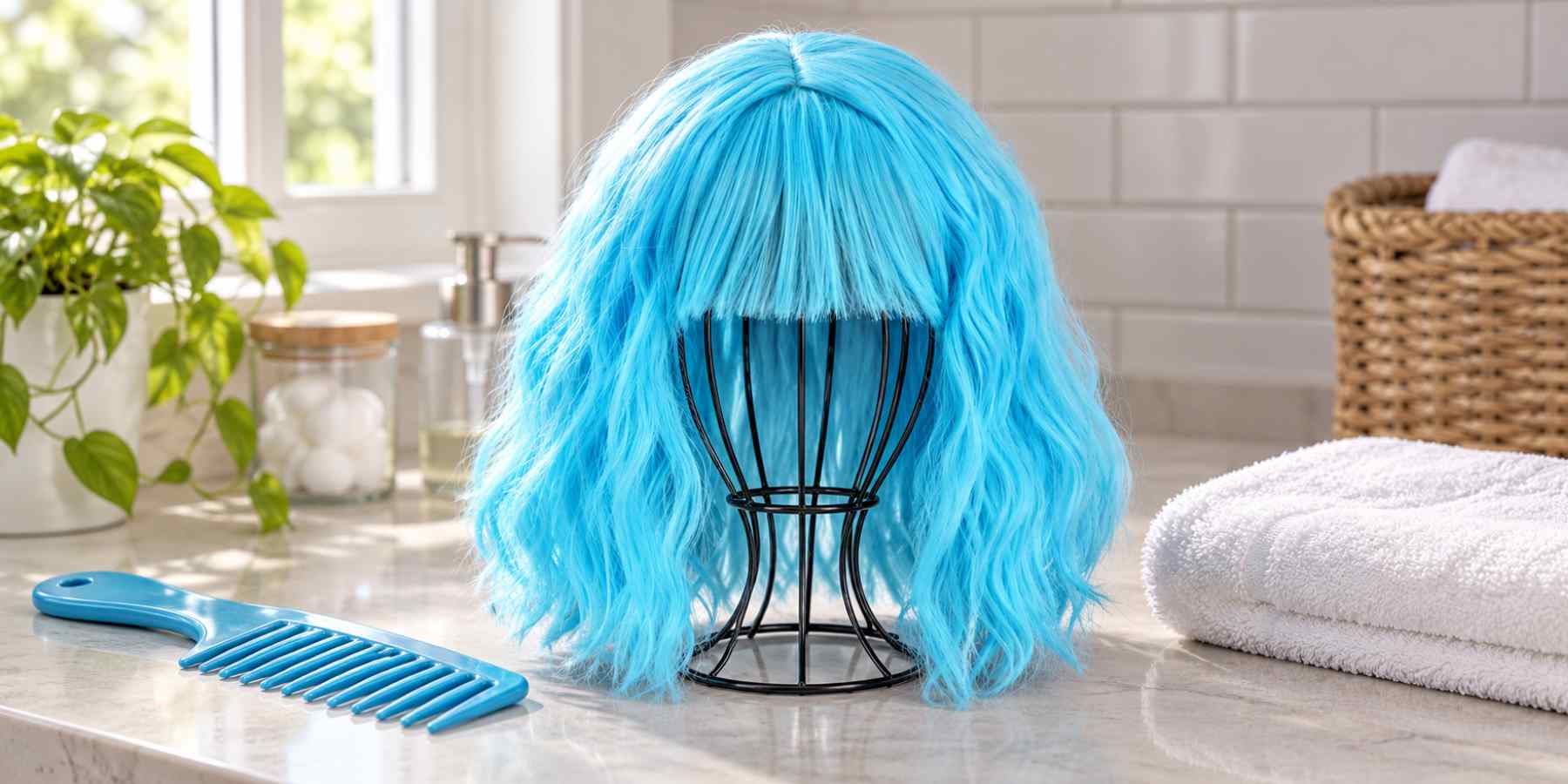
Wash a synthetic costume wig in cold water with wig shampoo, swish it gently, and let it air dry on a wig stand. Never use hot water or a blow dryer.
Most costume wigs are made of synthetic fiber, and synthetic fiber hates heat. Hot water or a blow dryer can frizz it, kink it, or even melt it. Start by gently working out tangles with your fingers or a wide-tooth comb. Then fill a sink with cold water and a little wig shampoo. Dip the wig in and swish it back and forth. Don't rub it. Rinse with cold water until the water runs clear, then gently blot it with a towel.
Let it dry on a wig stand or a tall bottle so it keeps its shape. Once it's dry, store it on the stand or back in its original package with a hairnet over it. Skip plastic bags, which can trap moisture inside. Wigs that get crushed in a bin pick up bends and kinks that are tough to fix. Wearing a fake beard or mustache? Gently peel off any old adhesive before storage, so it's ready for a fresh stick next year.
How Do You Get Fake Blood and Face Paint Out of a Costume?
Shop the look: Fake Blood | Makeup
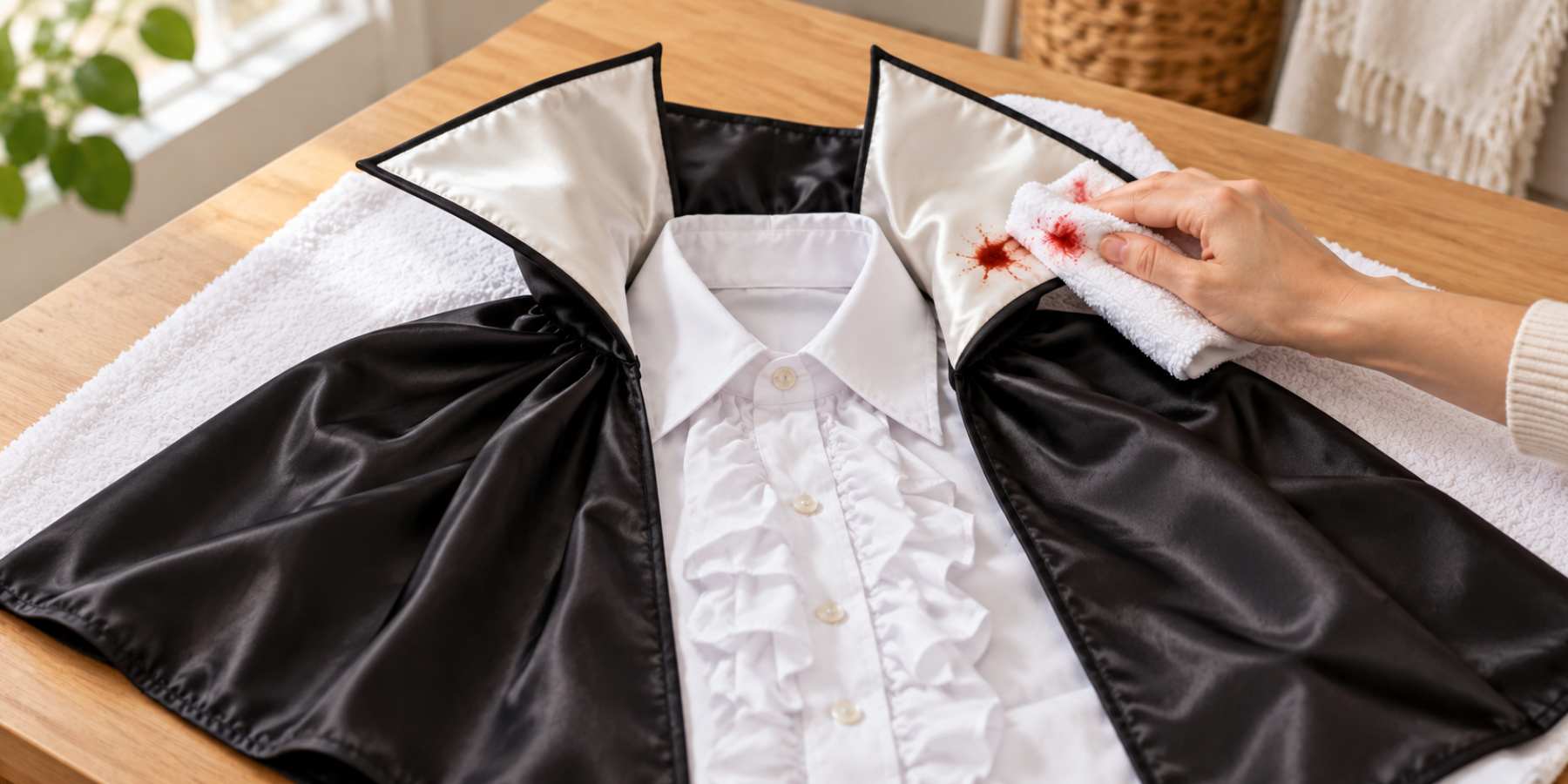
Blot it right away, never rub it, and keep the costume out of the dryer until the stain is gone. Rubbing alcohol lifts most face paint, and a long soak helps with old fake blood.
Face paint and fake blood are made to stay put. That's awesome on your face and not so awesome on your cape. The first rule is to blot, not rub, since rubbing pushes color deeper into the fibers. For face paint, dab the spot with rubbing alcohol, then flush cold water through the back of the fabric. Pretreat it with a stain remover and wash it the way the tag says. Water-based paint often lifts with warm, soapy water, and oil-based paint needs a prewash stain treatment.
Fake blood is a little trickier. Heat sets it, so keep the costume far from the dryer until the stain is totally gone. Old, dried stains can soak overnight in a mix of white vinegar and water before you wash them. Repeat the soak if you need to. Before you try any of these fixes, test on a hidden inside seam. Alcohol and vinegar are usually fine on polyester, but they can hurt prints, foam, and latex. Better to find out on a seam than on Elmo's face or the Fairy Godmother's cape... unless you're going for a really unique story.
Where Is the Best Place to Store Halloween Costumes?
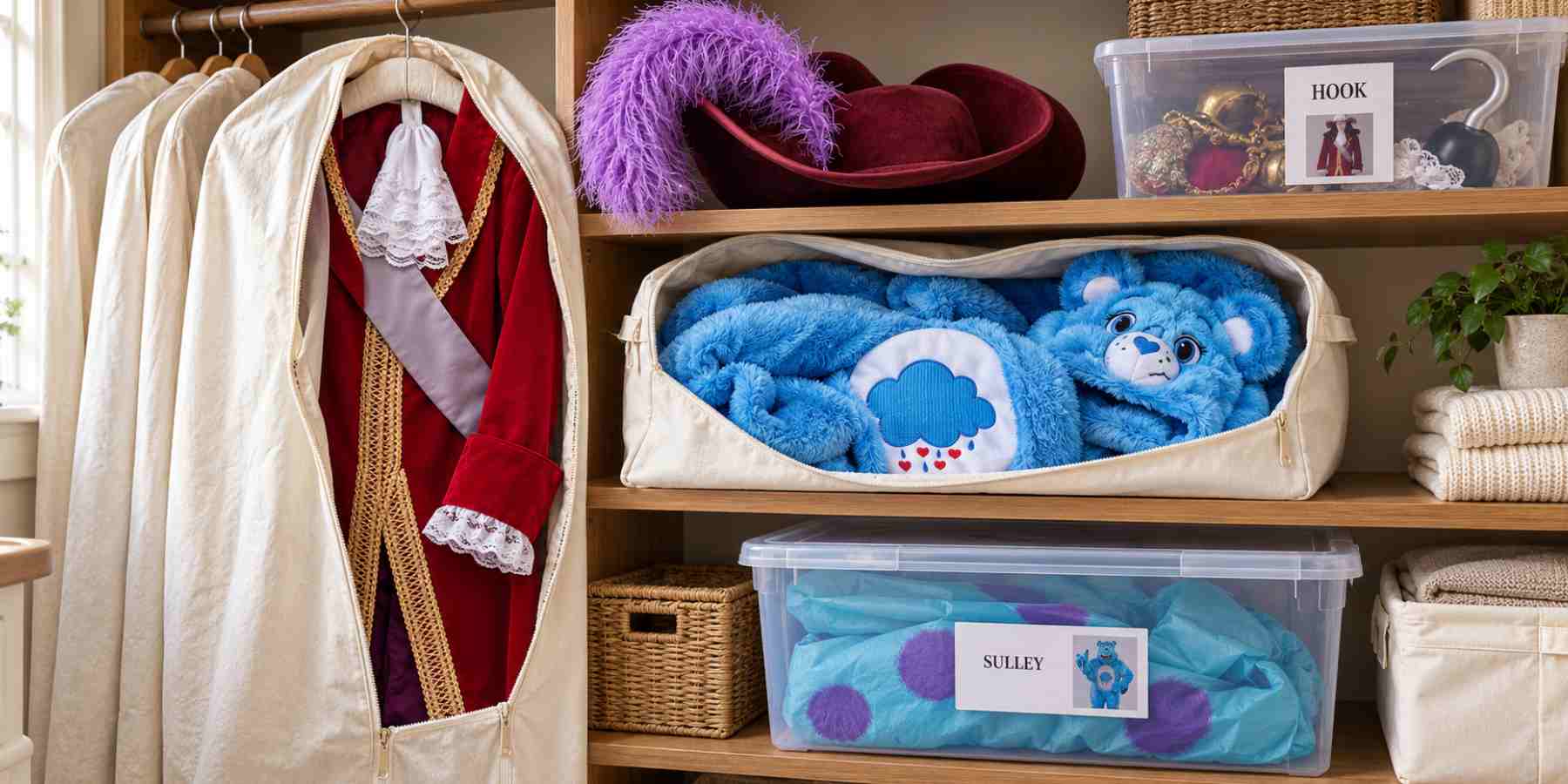
Store Halloween costumes in a spare closet or under a bed, inside breathable garment bags or lidded plastic bins. Skip hot attics, damp basements, and garages, and keep everything off the floor.
Where you store a costume matters just as much as how you clean it. Attics bake all summer, and heat hurts fabric, latex, and plastic. Basements stay damp, which leads to mildew. Garages pick up moisture from concrete floors and cars. Experts at the Mississippi State University Extension warn against both attics and basements for storing clothes. The best spots are inside your living space, like a spare closet or under a bed. Wherever it goes, keep bins off the floor, since concrete can wick moisture up.
Next, pick the right container for the material. Breathable cotton or muslin garment bags work best for hanging costumes, gowns, and faux fur. Lidded plastic bins are great for fully dry synthetic costumes, and they keep bugs out. Toss in a desiccant pack if your home runs humid. Skip cardboard boxes, which pests can sneak into, and dry cleaner plastic, which traps moisture. Tuck acid-free tissue paper into sleeves, hoods, and folds to stop hard creases.
Cedar blocks are a nice bonus, but they're not a force field. Pest control pros say cedar does little inside a normal bin, so clean costumes and closed containers do the real work. Just keep the wood from touching fabric. Finally, label everything. Write the costume name and size on each bin, and tape a photo to the front. Next October, you'll find your Sasquatch in thirty seconds instead of digging through every box in the house.
Costume storage checklist:
- Clean and 100% dry before it goes in
- Spare closet or under the bed, never the attic, basement, or garage
- Off the floor
- Cotton garment bags for hanging and delicate pieces
- Lidded plastic bins for dry synthetics, plus a desiccant pack in humid homes
- Acid-free tissue in folds, sleeves, and hoods
- One bin per costume, labeled with the name, size, and a photo
- Tissue paper between velvet and red fabrics; colors can bleed over time!
Your costumes are packed and labeled. Before you close the lid, though, take one more look for small damage.
How Do You Repair a Costume and Costume Accessories?
Fix Small Rips, Loose Sequins, and Dead Batteries

Shop the look: Accessories | Accessory Kits | Wings
Fix small problems now, while you still remember them. Restitch loose seams and sequins, patch inflatable rips, swap stretched elastic, and clean any battery corrosion.
A tiny rip today can turn into a big hole by next fall, especially if it sits folded under other costumes. So take ten minutes for repairs before anything goes away. Restitch popped seams and loose buttons with a needle and matching thread. Sew back any dropped sequins or trim. Small rips in an inflatable can be stitched by hand or covered with clear packing tape. Swap stretched mask elastic and worn-out hook and loop strips for fresh ones. Future you will be thankful.
Spot white crust in a battery box? That's alkaline battery leakage. Put on gloves, dab the metal contacts with vinegar or lemon juice on a cotton swab. Let the compartment dry fully before you add new batteries. Then set a phone reminder for early September. Unpack each costume, try it on, test fans and lights, and make a list of anything that needs replacing. That way you can order new pieces long before the October rush hits.
That's a lot of tips. Here's the whole thing on one easy screen.
Halloween Costume Care Cheat Sheet
Need the short version? Find your costume type in the table below and follow the row.
Every costume on this list follows the same three big rules: clean it, dry it all the way, and store it cool, dark, and dry. The table shows where each type bends those rules. Inflatables need their fans pulled, fur needs brushing, and latex needs powder. Save this chart to your phone or print it and tape it inside your costume bin lid. That way, next year's cleanup takes minutes instead of a whole afternoon of guessing.
Costume type | How to wash | How to dry | How to store | Watch out for | Shop it |
Jumpsuits | Cold, gentle, inside out | Air or low heat | Bin, hood stuffed with tissue | Pills from open Velcro | |
Inflatable costumes | Spot clean, fan removed | Air, every fold open | Bin with a parts bag | Mildew, leaky batteries | |
Faux fur and plush | Cold hand wash or delicate | Air, brush when damp | Cotton bag, never crushed | Matting, heat | |
Mascot heads | Mist, brush, wet/dry vac | Air with a fan | Upright on a shelf | Mold in foam | |
Multi-piece sets | Each piece by its material | Air | One labeled bin per kit | Lost pieces | |
Sequins, satin, tulle | Cold hand wash or dry clean | Flat on a towel | Folded inside out w/ tissue | Dryer heat | |
Latex masks | Lukewarm water, mild soap | Air, inside first | Powdered, stuffed, dark | Sun, heat, folds | |
Silicone masks | Cool water, unscented soap | Air | On a foam head, covered | Dust, heat | |
Vacuform masks | Wipe only | Air | Nested, nothing on top | Hot cars and attics | |
Mouth mover masks | Spot clean, brush fur | Air | Stuffed, jaw lined up | Bent hinge | |
Wigs | Cold water, wig shampoo | Air on a stand | Stand or original package | Hot water, blow dryer | |
Props and light-ups | Wipe only | Air | Flat, batteries out | Corrosion, dents |
FAQ: How to Clean and Store Halloween Costumes
Can you put a Halloween costume in the dryer?
Usually not. Dryer heat can melt sequins, frizz faux fur and wigs, and set fake blood stains for good. Plain fleece onesies can tumble on low if the tag allows it, but pull them out while they're still a little damp. For everything else, air dry flat or on a hanger.
Can you wash an inflatable costume in the washing machine?
Check the tag, but most inflatable costumes call for spot cleaning or a gentle hand wash, not the machine. Always remove the fan and battery box first, since water can ruin them. Wipe the shell with mild soap, rinse it, and dry every fold before you store it.
How do you get the smell out of a costume without washing it?
Spray it lightly with plain, unflavored vodka mixed with water, then let it air dry. Theater costume crews and pro mascots use this trick because the alcohol fights odor and dries fast. Test it on a hidden spot first, especially on printed fabric.
Should you store Halloween costumes in plastic bins?
Yes, for fully dry synthetic costumes. Lidded bins keep out dust and pests, and a desiccant pack helps in humid homes. Delicate gowns, faux fur, and hanging pieces do better in breathable cotton garment bags. Skip cardboard boxes and dry cleaner plastic for long-term storage.
How do you keep a latex mask from sticking together?
Wash and fully dry the mask, then dust the inside lightly with talc, cornstarch, or baby powder. Stuff it with tissue or set it on a foam head so it never folds. Keep it in a cool, dark spot, since heat and light make latex sticky and brittle.
Ready to Plan Next Year's Halloween?
A clean, dry, well-packed costume is the best gift you can give future you. Start packing tonight, and next year will thank you. Picture next October. You open a bin and find your inflatable T-Rex ready to stomp, and your Grumpy Bear still fluffy. Even your Ursula mask looks as fierce as the day you got it. That's the payoff for ten minutes of care right now. And if a costume didn't quite survive the big night? That's okay too. Right after Halloween is the perfect time to start dreaming up next year's look. The ideas are still buzzing, and the clearance shelves are stocked.
Shop Halloween Costume Clearance
Keep reading: